Complex PCI Centre
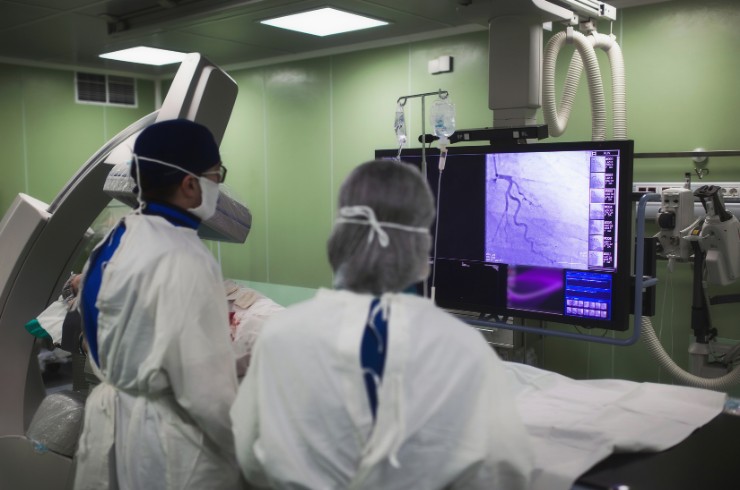
Complex PCI Centre and Advanced Coronary Intervention in Amravati, Maharashtra
Complex Percutaneous Coronary Intervention (PCI) refers to advanced catheter-based treatment for coronary artery disease involving challenging blockages, complex anatomy, severe calcification, multiple vessels, chronic total occlusions, or patients with increased clinical risk.
Dr. Niraj provides specialized assessment and treatment planning for patients who may require advanced coronary intervention in Amravati, Maharashtra. Complex PCI requires careful evaluation of coronary anatomy, heart function, symptoms, associated conditions and procedural risk before selecting the most appropriate strategy.
What it is
A Complex PCI Centre focuses on coronary interventions that require advanced planning, specialized techniques and detailed assessment beyond routine angioplasty.
Complex coronary conditions may include:
- Left Main PCI
- Bifurcation PCI
- CTO PCI
- Multivessel PCI
- Calcified Lesion PCI
- Ostial Lesions
- Diffuse Coronary Disease
- In-Stent Restenosis
- High-Risk PCI
- Cardiogenic Shock PCI
- Image-Guided PCI
- Physiology-Guided PCI
Each of these represents a different clinical or anatomical challenge and may require an individualized interventional strategy.
Causes
The need for complex PCI generally develops from advanced or anatomically challenging coronary artery disease.
Underlying causes may include:
- Atherosclerosis
- Progressive coronary plaque formation
- Severe coronary calcification
- Long or diffuse arterial narrowing
- Complete coronary artery blockage
- Disease involving multiple coronary vessels
- Disease occurring at coronary artery branch points
- Recurrent narrowing within a previously placed stent
The underlying coronary disease and the patient’s overall cardiovascular condition determine whether complex PCI is appropriate.
Risk factors
Risk factors for complex coronary disease may include:
- Diabetes
- High blood pressure
- High cholesterol
- Smoking
- Obesity
- Physical inactivity
- Increasing age
- Family history of coronary disease
- Chronic kidney disease
- Previous heart attack
- Previous coronary angioplasty or stent placement
- Established multivessel coronary disease
Certain patients may also have increased procedural risk because of reduced heart function or other serious medical conditions.
Symptoms
Symptoms depend on the type and severity of coronary disease.
Patients may experience:
- Chest pain or pressure
- Breathlessness
- Reduced exercise tolerance
- Unusual fatigue
- Sweating
- Dizziness
- Palpitations
- Discomfort spreading to the arm, shoulder, back, neck or jaw
Some patients may have significant coronary disease without typical symptoms, particularly those with diabetes or other high-risk conditions.
Red-flag symptoms
Seek immediate emergency medical attention for:
- Severe or persistent chest pain
- Sudden severe breathlessness
- Chest discomfort occurring at rest
- Cold sweating associated with chest discomfort
- Fainting
- Severe weakness
- Sudden confusion
- Pain spreading to the arm, back, neck or jaw
- Rapid deterioration in a patient with known coronary disease
These symptoms may indicate acute coronary syndrome or a heart attack.
Diagnosis
Complex PCI planning begins with a detailed assessment of the patient’s symptoms, medical history and cardiovascular risk.
Depending on the clinical situation, investigations may include:
- ECG
- Echocardiography
- Blood tests
- Cardiac biomarkers when acute coronary syndrome is suspected
- Coronary CT angiography
- Coronary angiography
- Intravascular imaging
- Coronary physiology assessment
- Assessment of left ventricular function
Coronary angiography provides an anatomical view of the coronary arteries, while intravascular imaging and coronary physiology can provide additional information when selected lesions require more detailed evaluation.
When coronary angiography may be required
Coronary angiography may be recommended when detailed assessment of coronary anatomy is required.
It may be considered for:
- Suspected significant coronary disease
- Persistent or worsening angina
- High-risk findings on non-invasive testing
- Multivessel disease
- Suspected left main disease
- Chronic total occlusion
- Complex or heavily calcified lesions
- Recurrent narrowing within a previous stent
- Assessment before complex PCI
Angiography helps the interventional team understand the location, extent and complexity of coronary disease before determining the appropriate treatment strategy.
Medical treatment
Not every complex coronary lesion requires immediate PCI.
Depending on the patient’s condition, medical management may include:
- Cholesterol-lowering treatment
- Antiplatelet medicines when indicated
- Anti-anginal treatment
- Blood-pressure management
- Diabetes management
- Smoking cessation
- Weight management
- Heart-healthy dietary changes
- Appropriate physical activity
- Cardiac rehabilitation where appropriate
Medical treatment may be used alone or alongside revascularization depending on the patient’s symptoms, coronary anatomy and cardiovascular risk.
When intervention may be required
Complex PCI may be considered when significant coronary disease causes symptoms or when revascularization is clinically appropriate.
Intervention may be considered for:
- Significant left main disease
- Complex bifurcation lesions
- Chronic total occlusions
- Significant multivessel disease
- Heavily calcified lesions
- Significant ostial lesions
- Diffuse coronary disease
- In-stent restenosis
- Selected high-risk patients
- Selected patients with cardiogenic shock
The decision depends on coronary anatomy, symptoms, heart function, overall clinical risk and the suitability of PCI compared with other treatment options.
Treatment alternatives
Depending on the patient’s condition, alternatives to or alongside complex PCI may include:
- Guideline-directed medical therapy
- Lifestyle and risk-factor management
- Functional assessment of coronary lesions
- Coronary artery bypass grafting (CABG)
- Staged PCI
- Referral for specialized cardiac evaluation where required
For certain complex patterns of coronary disease, CABG may be considered instead of PCI. The treatment decision should be individualized after assessment of coronary anatomy and overall clinical risk.
Left Main PCI
Left Main PCI involves treatment of significant narrowing in the left main coronary artery, which supplies a large portion of the heart muscle.
Because of the importance of this vessel, left main disease requires careful anatomical assessment and detailed procedural planning.
Bifurcation PCI
Bifurcation PCI treats coronary disease occurring where one coronary artery divides into two branches.
These lesions require careful planning to preserve blood flow through both branches and achieve an effective treatment result.
CTO PCI
CTO PCI is an advanced intervention used to treat a chronic total occlusion, where a coronary artery has been completely blocked for an extended period.
CTO procedures can require specialized crossing techniques and careful procedural planning.
Multivessel PCI
Multivessel PCI involves treating significant disease affecting more than one coronary artery.
Treatment may involve a single procedure or staged interventions depending on the patient’s anatomy, clinical condition and overall procedural risk.
Calcified Lesion PCI
Severely calcified coronary arteries can make balloon expansion and stent placement more challenging.
Selected patients may require specialized plaque-modification techniques before stent implantation.
Ostial Lesions
Ostial lesions occur near the origin of a coronary artery.
Their location can make accurate treatment and stent positioning particularly important, requiring detailed assessment and careful procedural planning.
Diffuse Coronary Disease
Diffuse coronary disease involves extensive narrowing across a longer section of a coronary artery rather than one isolated blockage.
Treatment planning depends on the extent of disease, symptoms, vessel characteristics and overall coronary anatomy.
In-Stent Restenosis
In-stent restenosis occurs when a previously treated coronary artery becomes narrowed again within or around a previously implanted stent.
Evaluation may involve coronary angiography and, in selected cases, intravascular imaging to understand the mechanism of recurrent narrowing.
High-Risk PCI
High-risk PCI involves coronary intervention in patients who have increased clinical or anatomical risk.
Factors may include:
- Severe LV dysfunction
- Extensive coronary disease
- Complex coronary anatomy
- Significant comorbidities
- Cardiogenic shock in selected emergency situations
Such procedures require careful planning and appropriate monitoring.
Cardiogenic Shock PCI
Cardiogenic shock PCI refers to coronary intervention performed when severe cardiac pump failure is associated with significant coronary disease, particularly in selected acute myocardial infarction cases.
These patients require urgent assessment and coordinated critical-care management.
Where mechanical circulatory support is considered, the specific equipment available on-site must be confirmed. Technologies that are not physically available may require referral, collaboration or special arrangement with an appropriate cardiac centre.
Image-Guided PCI
Image-guided PCI uses technologies such as intravascular ultrasound (IVUS) or other intravascular imaging methods to provide detailed information from inside the coronary artery.
This can help assess lesion characteristics, vessel dimensions and stent deployment in selected complex cases.
Physiology-Guided PCI
Physiology-guided PCI uses measurements of coronary blood flow or pressure to help determine whether a coronary narrowing significantly affects blood supply to the heart muscle.
It can provide additional information when the significance of a coronary lesion is uncertain based on angiography alone.
Related procedures
Complex PCI may involve or be associated with:
- Coronary Angiography
- Left Main PCI
- Bifurcation PCI
- CTO PCI
- Multivessel PCI
- Calcified Lesion PCI
- Rotablation
- Intravascular Lithotripsy (IVL)
- Intravascular Imaging
- Coronary Physiology
- High-Risk PCI
- Cardiogenic Shock PCI
- Coronary Artery Bypass Grafting (CABG)
FAQs
What is complex PCI?
Complex PCI is advanced coronary intervention used for challenging blockages or patients with increased anatomical or clinical risk.
How is complex PCI different from routine angioplasty?
Complex PCI may involve more challenging coronary anatomy, severe calcification, chronic total occlusions, multiple vessels, left main disease or increased patient risk.
What is left main PCI?
Left main PCI is an intervention used to treat significant narrowing in the left main coronary artery, an important vessel supplying a large portion of the heart.
What is CTO PCI?
CTO PCI is an advanced procedure used to reopen a coronary artery that has been completely blocked for an extended period.
Does every complex blockage require a stent?
No. Treatment depends on the patient’s symptoms, coronary anatomy, clinical risk and the significance of the blockage. Medical treatment or bypass surgery may be more appropriate in selected patients.
What is image-guided PCI?
Image-guided PCI uses intravascular imaging to provide detailed information about the coronary artery and help optimize treatment and stent placement.
What is physiology-guided PCI?
Physiology-guided PCI uses pressure or blood-flow measurements to determine whether a coronary narrowing significantly affects blood flow to the heart.
Can complex PCI be performed in patients with severe heart dysfunction?
Selected patients with severe LV dysfunction may undergo high-risk PCI after careful assessment. The treatment strategy depends on individual clinical and anatomical factors.
When should I consult Dr. Niraj in Amravati?
Patients with complex coronary blockages, previous unsuccessful PCI, chronic total occlusion, multivessel disease, recurrent stent narrowing or other challenging coronary conditions may benefit from specialist evaluation by Dr. Niraj.
Book an Appointment with Dr. Niraj for Complex PCI Evaluation in Amravati
If you have been diagnosed with complex coronary artery disease or have been advised to undergo advanced PCI, Dr. Niraj can assess your coronary anatomy, symptoms and overall cardiovascular condition and help determine an appropriate treatment strategy.