Left Main & Bifurcation PCI
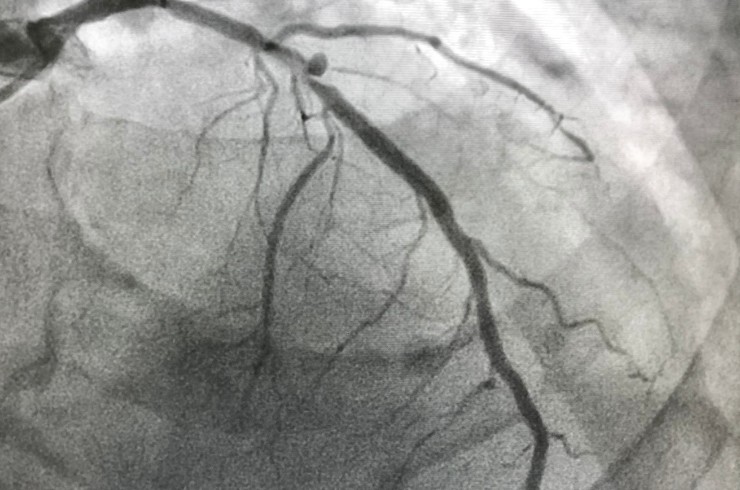
Left Main & Bifurcation PCI Treatment and Advanced Coronary Care in Amravati, Maharashtra
Left Main and Bifurcation PCI are advanced coronary interventions used to treat complex blockages involving the left main coronary artery or coronary arteries that divide into two branches. These procedures require detailed anatomical assessment, careful procedural planning and appropriate stent strategies.
For patients seeking Left Main and Bifurcation PCI in Amravati, Maharashtra, Dr. Niraj evaluates coronary anatomy, symptoms, heart function and overall cardiovascular risk to determine whether PCI, CABG or another treatment approach may be appropriate.
What it is
Left Main PCI involves treating significant narrowing in the left main coronary artery, which supplies blood to a substantial portion of the heart muscle.
Bifurcation PCI involves treating coronary disease located where one coronary artery divides into two branches. These lesions can be technically challenging because treatment must address the main vessel while preserving blood flow to the side branch.
Treatment strategies may include:
- Provisional stenting
- Two-stent techniques
- Proximal optimization technique (POT)
- Kissing-balloon techniques
- IVUS-guided PCI
The most appropriate strategy depends on the patient’s coronary anatomy and lesion characteristics.
Causes
Left main and bifurcation disease most commonly develops because of coronary atherosclerosis, where plaque gradually accumulates within the artery wall.
Disease may progressively narrow the vessel or, in some situations, become complicated by plaque rupture and clot formation.
Bifurcation disease can occur when atherosclerotic plaque extends across a coronary branch point, affecting either the main vessel, side branch or both.
Risk factors
Risk factors for left main and bifurcation coronary disease include:
- Diabetes
- High blood pressure
- High cholesterol
- Smoking or tobacco use
- Obesity
- Physical inactivity
- Increasing age
- Family history of coronary artery disease
- Previous heart attack
- Chronic kidney disease
- Established coronary artery disease
The presence of multiple cardiovascular risk factors can increase the likelihood of significant coronary disease.
Symptoms
Symptoms depend on the severity and location of coronary narrowing.
Possible symptoms include:
- Chest pressure or discomfort
- Breathlessness during activity
- Reduced exercise tolerance
- Unusual fatigue
- Sweating
- Dizziness
- Pain spreading to the arm, shoulder, back, neck or jaw
- Shortness of breath with exertion
Some patients may have significant coronary disease without typical symptoms.
Red-flag symptoms
Seek immediate emergency medical attention if you develop:
- Severe or persistent chest pain
- New chest pressure occurring at rest
- Sudden severe breathlessness
- Cold sweating associated with chest discomfort
- Fainting
- Severe weakness
- New confusion
- Pain spreading to the arm, back, neck or jaw
- Rapid worsening of symptoms in a patient with known coronary disease
These symptoms may indicate acute coronary syndrome or a heart attack.
Diagnosis
Diagnosis begins with assessment of symptoms, medical history and cardiovascular risk factors.
Depending on the clinical situation, investigations may include:
- ECG
- Blood tests
- Echocardiography
- Assessment of left ventricular function
- Stress or functional cardiac testing
- Coronary CT angiography in selected patients
- Coronary angiography
- Intravascular ultrasound (IVUS)
- Coronary physiology assessment where appropriate
Coronary angiography is particularly important when detailed assessment of left main or bifurcation anatomy is required before revascularization.
When coronary angiography may be required
Coronary angiography may be recommended when significant left main or bifurcation disease is suspected or requires detailed anatomical assessment.
It can help evaluate:
- Severity of narrowing
- Location of the lesion
- Main-vessel anatomy
- Side-branch involvement
- Lesion length
- Vessel size
- Coronary calcification
- Other affected coronary arteries
Detailed angiographic assessment can help the cardiac team determine whether PCI, CABG or another treatment strategy is more suitable.
Medical treatment
Medical treatment remains an important part of managing coronary artery disease, whether or not an intervention is required.
Depending on the patient’s condition, treatment may include:
- Cholesterol-lowering medicines
- Antiplatelet medicines when clinically indicated
- Anti-anginal medicines
- Blood-pressure control
- Diabetes management
- Smoking cessation
- Weight management
- Heart-healthy dietary changes
- Appropriate physical activity
- Cardiac rehabilitation where suitable
Medication may be used alone or alongside coronary revascularization.
When intervention may be required
PCI may be considered when significant left main or bifurcation disease is clinically appropriate for catheter-based treatment.
Factors considered include:
- Severity of coronary narrowing
- Symptoms
- Extent of coronary disease
- Left ventricular function
- Lesion anatomy
- Side-branch involvement
- Overall procedural risk
- Suitability of PCI compared with CABG
Left main and complex bifurcation lesions require careful planning because the affected vessels may supply a substantial amount of heart muscle.
Provisional Stenting
Provisional stenting is a strategy in which the main coronary vessel is treated first, with additional side-branch treatment performed only when necessary.
This approach may be appropriate for selected bifurcation lesions where the side branch can potentially be preserved without an initial two-stent strategy.
The final strategy depends on lesion anatomy and the clinical situation.
Two-Stent Techniques
Some complex bifurcation lesions may require an upfront two-stent approach to adequately treat both the main vessel and side branch.
The choice of technique depends on:
- Bifurcation anatomy
- Side-branch size
- Plaque distribution
- Lesion complexity
- Vessel angles
- Calcification
- Operator assessment
The technique is selected to achieve appropriate vessel coverage while maintaining blood flow through both branches.
POT
POT, or Proximal Optimization Technique, involves using a balloon to optimize the proximal portion of a coronary stent.
It can help improve stent expansion and positioning within the main vessel and may facilitate appropriate access to the side branch during bifurcation PCI.
The technique is selected according to the specific bifurcation anatomy and stent strategy.
Kissing-Balloon Concepts
A kissing-balloon technique involves simultaneous or coordinated balloon inflation within the main vessel and side branch in selected bifurcation procedures.
It may be used to optimize the treated bifurcation and help restore an appropriate configuration of the branch vessels.
The need for this technique depends on the procedural strategy and angiographic findings.
IVUS Guidance
Intravascular ultrasound (IVUS) provides detailed images from inside the coronary artery.
In left main and bifurcation PCI, IVUS may assist with:
- Assessing vessel dimensions
- Understanding plaque distribution
- Evaluating lesion characteristics
- Selecting appropriate stent size
- Assessing stent expansion
- Checking the final result
IVUS can provide information that may not be fully apparent from angiography alone.
When PCI Versus CABG May Be Considered
Both PCI and coronary artery bypass grafting (CABG) can be used for selected patients with significant coronary disease.
The choice depends on factors such as:
- Coronary anatomy
- Complexity of disease
- Number of affected vessels
- Diabetes
- Left ventricular function
- Surgical risk
- Clinical presentation
- Technical feasibility of PCI
- Expected long-term outcomes
Some patients may be better suited to CABG, while selected patients may be appropriate candidates for PCI.
Heart Team Decision-Making
For complex left main or multivessel coronary disease, treatment decisions may involve a Heart Team approach.
This allows different cardiac specialists to consider:
- Coronary anatomy
- Clinical condition
- Procedural complexity
- Surgical risk
- Long-term treatment considerations
- Patient preferences
The objective is to select the treatment strategy that provides the most appropriate balance between potential benefits and risks for the individual patient.
Case-Based Education
Case Example: Left Main Coronary Disease
A patient is diagnosed with significant left main coronary narrowing during coronary evaluation. Detailed anatomical assessment is performed to understand the extent of disease and determine whether PCI or CABG provides the more appropriate revascularization strategy.
Case Example: Complex Bifurcation Lesion
A patient has significant disease involving a coronary artery and its side branch. The bifurcation anatomy is assessed before selecting a provisional stenting or two-stent strategy.
Case Example: IVUS-Guided PCI
A patient undergoing complex left main PCI receives intravascular imaging to assist with vessel assessment, stent selection and evaluation of the final stent result.
These examples are educational and de-identified. They do not represent a specific patient or guarantee a particular treatment outcome.
Treatment Alternatives
Depending on the patient’s clinical and anatomical situation, treatment options may include:
- Medical therapy
- Lifestyle and risk-factor modification
- PCI
- CABG
- Additional diagnostic assessment before revascularization
- Heart Team evaluation
The most appropriate treatment should be selected after a detailed assessment of coronary anatomy and the patient’s overall cardiovascular health.
Related Procedures
Related procedures include:
- Coronary Angiography
- Complex PCI
- CTO Angioplasty
- Multivessel PCI
- Calcified Lesion PCI
- Rotablation
- Intravascular Lithotripsy (IVL)
- Intravascular Imaging
- Coronary Physiology
- Coronary Artery Bypass Grafting (CABG)
FAQs
What is Left Main PCI?
Left Main PCI is a catheter-based coronary intervention used to treat significant narrowing involving the left main coronary artery.
What is Bifurcation PCI?
Bifurcation PCI treats coronary disease located where one coronary artery divides into two branches.
What is provisional stenting?
Provisional stenting generally involves treating the main vessel first and addressing the side branch only when additional treatment is required.
When is a two-stent technique used?
A two-stent technique may be considered when the bifurcation anatomy or side-branch disease makes treatment of both branches necessary from the beginning.
What is POT in bifurcation PCI?
POT stands for Proximal Optimization Technique. It uses a balloon to optimize the proximal portion of a coronary stent during selected bifurcation procedures.
What is IVUS-guided PCI?
IVUS-guided PCI uses intravascular ultrasound to provide detailed images from inside the coronary artery and assist with procedural planning and stent optimization.
Is PCI or CABG better for left main coronary disease?
There is no single treatment that is best for every patient. The choice depends on coronary anatomy, disease complexity, clinical factors, surgical risk and other individual considerations.
What is Heart Team decision-making?
Heart Team decision-making involves relevant cardiac specialists working together to evaluate complex coronary disease and determine an appropriate treatment strategy.
Can left main disease cause a heart attack?
Yes. Significant coronary narrowing or sudden blockage involving the left main coronary artery can result in severe reduction of blood flow and potentially cause a heart attack.
When should I consult Dr. Niraj in Amravati?
Patients diagnosed with left main disease, complex bifurcation lesions, multivessel coronary disease or those advised to consider advanced PCI may benefit from an evaluation by Dr. Niraj in Amravati.
Book an Appointment with Dr. Niraj for Left Main and Bifurcation PCI in Amravati
If you have been diagnosed with left main coronary disease, bifurcation disease or another complex coronary blockage, Dr. Niraj can assess your coronary anatomy and help determine whether advanced PCI, CABG or another treatment approach may be appropriate.