Coronary Angiography
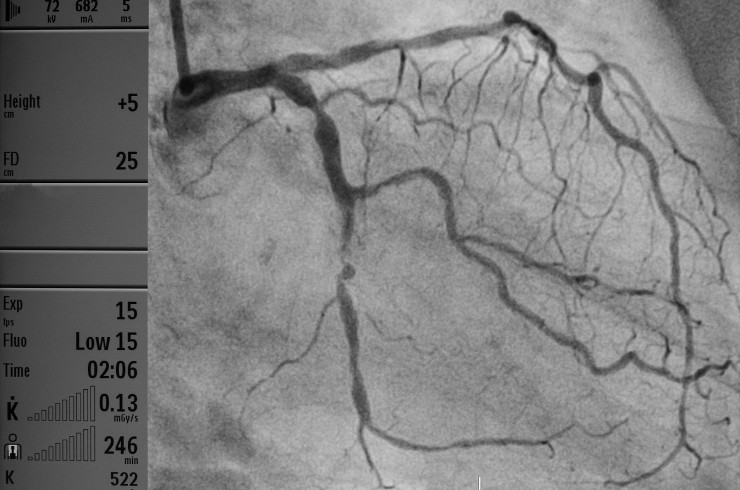
Coronary Angiography Procedure and Advanced Heart Evaluation in Amravati, Maharashtra
Coronary angiography is an invasive diagnostic procedure used to create detailed images of the coronary arteries and identify narrowing or blockages that may affect blood flow to the heart. It is an important investigation for selected patients with suspected or known coronary artery disease.
For patients seeking coronary angiography in Amravati, Maharashtra, Dr. Niraj can assess symptoms, cardiovascular risk, previous test results and overall health to determine whether angiography is appropriate and what further treatment may be required.
What Coronary Angiography Is
Coronary angiography uses a thin catheter and contrast material to visualize the coronary arteries under X-ray guidance.
It can help doctors identify:
- Narrowed coronary arteries
- Significant blockages
- Multivessel coronary disease
- Left main coronary disease
- Complex coronary anatomy
- Other findings that may influence treatment decisions
Angiography may also be performed when a patient is being evaluated for a possible coronary intervention.
Who May Need It
Coronary angiography may be considered for patients with:
- Suspected significant coronary artery disease
- Persistent or worsening angina
- Abnormal cardiac testing
- High-risk findings on non-invasive investigations
- Acute coronary syndrome
- Heart attack
- Known coronary disease requiring further assessment
- Complex coronary anatomy requiring detailed evaluation
- Symptoms that remain concerning despite medical treatment
The decision is individualized after considering the patient’s symptoms, medical history, examination and previous investigations.
Radial Angiography
Radial angiography is performed through the radial artery, usually at the wrist.
A catheter is introduced through the artery and guided toward the coronary arteries. Radial access is widely used because it can allow earlier mobility following the procedure and may reduce access-site bleeding compared with femoral access in appropriate patients.
Whether radial access is suitable depends on the patient’s anatomy, clinical condition and the treating team’s assessment.
Femoral Angiography
Femoral angiography uses the femoral artery in the groin as the access route.
It may be selected when radial access is unsuitable or when the clinical situation or procedural requirements make femoral access preferable.
The choice between radial and femoral access is made according to individual patient factors and procedural requirements.
What Happens During the Procedure
Before the procedure, the medical team reviews the patient’s medical history, medications, allergies and relevant test results.
During coronary angiography:
- The access site is cleaned and prepared.
- Local anaesthetic is administered.
- A catheter is introduced through the radial or femoral artery.
- The catheter is guided toward the heart.
- Contrast material is injected into the coronary arteries.
- X-ray imaging records the movement of contrast through the vessels.
- The cardiologist evaluates the coronary arteries for narrowing or blockages.
If a significant blockage is identified, the medical team discusses the appropriate treatment strategy based on the patient’s condition and coronary anatomy.
Typical Preparation
Preparation varies depending on the patient’s health and whether angiography is being performed electively or urgently.
The medical team may advise:
- Fasting for a specified period
- Reviewing current medicines
- Informing the team about allergies
- Checking kidney function where appropriate
- Reviewing diabetes medications
- Reviewing blood-thinning medicines
- Arranging transportation and post-procedure support when required
Patients should follow the specific instructions provided by their treating team rather than stopping prescribed medicines independently.
Recovery
Recovery depends on the access route, overall health and whether any additional intervention was performed.
After angiography, the access site is monitored for bleeding or other complications. Patients may be advised to:
- Rest for the recommended period
- Keep the access site clean and protected
- Follow activity restrictions provided by the medical team
- Drink fluids when appropriate
- Monitor the puncture site for unusual swelling or bleeding
- Return for medical review if concerning symptoms develop
Recovery can differ considerably if angiography is followed by angioplasty or stent placement.
Potential Risks and Limitations
Coronary angiography is generally considered an established diagnostic procedure, but it is invasive and carries potential risks.
Possible complications include:
- Bleeding or bruising at the access site
- Blood-vessel injury
- Infection
- Allergic reaction to contrast material
- Kidney-related complications in susceptible patients
- Abnormal heart rhythms
- Rare cardiovascular complications
The medical team assesses individual risk before the procedure.
Angiography also has limitations. It shows the internal appearance of coronary arteries but does not always provide the complete picture of how a narrowing affects blood flow. In selected cases, additional assessment using intravascular imaging or coronary physiology may be useful.
Angiography Versus CT Coronary Angiography
Both tests can evaluate the coronary arteries, but they are different procedures.
Coronary angiography is an invasive catheter-based investigation. It provides detailed visualization of coronary anatomy and can be followed immediately by an intervention when appropriate.
CT coronary angiography (CTCA) is a non-invasive imaging test that uses computed tomography and contrast to visualize the coronary arteries.
The appropriate test depends on the patient’s symptoms, clinical likelihood of coronary disease, previous investigations and overall health.
What Happens When a Blockage Is Detected
Finding a coronary blockage does not automatically mean that a stent is required.
After angiography, Dr. Nir may consider:
- The location of the blockage
- Severity of narrowing
- Number of affected vessels
- Symptoms
- Heart function
- Coronary anatomy
- Results of additional testing
- Overall cardiovascular risk
Depending on these factors, treatment may involve medical management, PCI/angioplasty, or referral for coronary artery bypass surgery (CABG) when appropriate.
For selected complex lesions, additional techniques such as intravascular imaging, coronary physiology, CTO angioplasty, rotablation or intravascular lithotripsy may be considered.
FAQs
Is coronary angiography painful?
The procedure is generally performed using local anaesthesia at the access site. Patients may experience some pressure or brief discomfort during parts of the procedure.
How long does coronary angiography take?
The duration varies depending on the complexity of the examination and whether additional assessment or treatment is required.
Is radial angiography better than femoral angiography?
Neither approach is universally better for every patient. Radial access may offer advantages for many patients, while femoral access can be appropriate in particular clinical or procedural situations.
Can angiography detect all coronary blockages?
Angiography provides detailed information about the coronary artery lumen, but some lesions may require additional assessment using intravascular imaging or coronary physiology.
Does finding a blockage mean I need a stent?
Not necessarily. Treatment depends on the severity and location of the blockage, symptoms, blood-flow significance, overall heart health and other clinical factors.
What happens if a serious blockage is found during angiography?
The cardiology team evaluates the findings and determines whether medical treatment, angioplasty and stenting, bypass surgery or additional assessment is most appropriate.
When should I consult Dr. Niraj in Amravati?
If you have persistent chest discomfort, unexplained breathlessness, abnormal cardiac test results, known coronary artery disease or concerns about coronary blockages, Dr. Niraj can assess whether further cardiac evaluation is appropriate.
Book an Appointment with Dr. Niraj for Coronary Angiography in Amravati
If you have been advised to undergo coronary angiography or have symptoms or test results suggesting coronary artery disease, Dr. Niraj can provide a detailed cardiovascular assessment and guide you through appropriate diagnostic and treatment options.